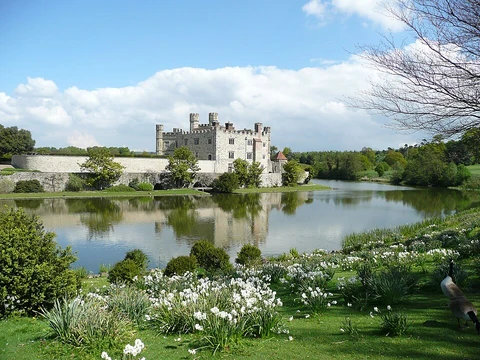
Castle of Stilo
Medieval fortress on Monte Consolino with panoramic views.
Perched atop Monte Consolino in Calabria, southern Italy, the Castle of Stilo—often called the Norman Castle—is an 11th-century medieval fortress built by Roger I of Sicily. Its elevated position provides sweeping views of the countryside.
The earliest known record of the castle appears in a concession act from Count Roger to Saint Bruno, dated 7 May 1093, which mentions a secluded spot between the place called Arena and the town of Stilo. By the 13th century, it was one of seventeen Calabrian castles under the administration of the Reale Curia for Charles I of Naples. During that time, it also served as a prison and received maintenance, as noted in folio 233 of 1281 from the Regia Zecca Archive. On 14 April 1323, the Duke of Calabria, son of King Robert, granted the stewardship of the castle—the "Castellania of Stilo"—to Noble Marco, Contestabile and Baron of Settingiano, along with his descendants. Restoration work has been ongoing since 2009.
Two main paths lead to the castle. One is steep and scenic, starting near the Cattolica church and following Stilo’s Via Crucis, which includes fourteen stations and three rest areas with benches and viewpoints. The other is wider and less steep, beginning near Stilo Cemetery.
Local legend tells of a ghostly drumming sound heard from the castle. The story goes that a drummer boy was sent into a secret passage beneath the fortress, beating his drum so others could follow. Midway, the drumming stopped abruptly, and the boy vanished without a trace.
- built
- 11th century
- builder
- Roger I of Sicily
- location
- Stilo, Calabria, southern Italy
- first recorded mention
- 7 May 1093
- type
- medieval fortress
Lore & Background
The first recorded mention of the Norman castle at Stilo dates to 7 May 1093, in a concession act by Count Roger to Saint Bruno. In the 13th century, it was among seventeen castles in Calabria administered by the Reale Curia under Charles I of Naples. During this period, the castle was also used as a prison and underwent maintenance, as recorded in folio 233 of 1281 from the Regia Zecca Archive. On 14 April 1323, records show the Duke of Calabria, son of King Robert, granted the 'Castellania of Stilo' (stewardship of the castle) to Noble Marco, Contestabile and Baron of Settingiano, to him and his descendants. Since 2009, the castle has been undergoing restoration efforts.
Reader's Guide
The Castle of Stilo is significant as a well-documented example of Norman fortification in southern Italy, with its history traceable through specific archival records from the 11th to the 14th centuries. Its role as one of seventeen castles administered by the Reale Curia under Charles I of Naples highlights its importance in the medieval administrative and defensive network of Calabria. The castle's use as a prison and the recorded maintenance in 1281 provide concrete evidence of its functional evolution. The 1323 grant of the castellania to a noble family illustrates the feudal system of the time. Accessible via two paths—one steep and panoramic near the Cattolica church, and a wider, less steep route near the Stilo Cemetery—the castle remains a tangible link to the region's medieval past. Ongoing restoration since 2009 underscores its continued cultural value. Local folklore adds a layer of mystery, with a legend of a drummer boy who vanished in a secret passage beneath the castle.
Did You Know?
- The first recorded mention of the castle is from 7 May 1093.
- In the 13th century, it was one of seventeen castles in Calabria administered by the Reale Curia under Charles I of Naples.
- On 14 April 1323, the Duke of Calabria granted the castellania of Stilo to Noble Marco and his descendants.
- Local legend tells of a drummer boy who vanished in a secret passage beneath the castle.
More in Norman castles 1-24
Spotted an error? Know more?
This is a living reference — every entry is fact-audited, and reader corrections feed straight into our audit queue. Suggest an edit · See this site's audit record