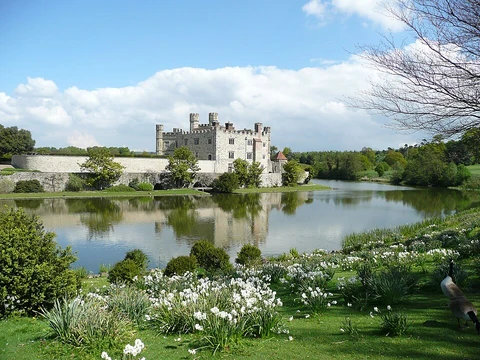
Coity Castle
Norman castle in Glamorgan, built by a legendary knight of the Twelve.
Coity Castle (Welsh: Castell Coety) is a Norman castle in Bridgend (historically in Glamorgan), Wales. Built by Sir Payn "the Demon" de Turberville, one of the legendary Twelve Knights of Glamorgan, the castle stands as a Grade I listed building now in ruins near the town of Bridgend. Its history spans from a late 11th-century ringwork through medieval sieges and Tudor remodelling, reflecting centuries of occupation by notable families.
- builder
- Sir Payn 'the Demon' de Turberville (c. 1080s–1100)
Lore & Background
Coity Castle began as a late 11th-century ringwork, with a rectangular stone keep and main curtain wall added in the 12th century under Sir Payn de Turberville. The three-storey keep was primarily defensive. In the early 15th century, William Gamage and Sir Gilbert Denys besieged the castle for a month, but were ultimately able to enforce the Gamage claim to Coity.
During the 16th century, the Gamage family remodelled the living quarters, adding a storey, new windows, and two chimney stacks. The domestic range included a first-floor hall above a vaulted undercroft, service rooms with ovens, and a malting kiln. The Gamages held Coity until John Gamage's death in 1584. The castle later passed to the Sydney family and then to the Earls of Dunraven.
Reader's Guide
Coity Castle is significant as a well-preserved example of Norman fortification in Glamorgan, built on a site with potential Roman military activity. Its history illustrates the turbulent feudal claims of the 15th century, including the Gamage siege and subsequent imprisonment. The Tudor remodelling shows adaptation to domestic comfort, with a hall, service rooms, and private apartments. The castle's inner ward, approximately 150 feet in diameter, is protected by walls up to 30 feet tall. Today, Cadw manages the site, using the Welsh name Castell Coety in English since 2024. Visitors can view the southern walls from the main road and access the eastern walls via a path. The castle's legacy extends to a Great Western Railway Castle Class steam locomotive named Coity Castle (number 5035).
Did You Know?
- A Great Western Railway Castle Class steam locomotive, number 5035, was named Coity Castle.
- The castle was besieged for a month in the early 15th century by William Gamage and Sir Gilbert Denys.
- The site may have been a Roman fort due to its strategic location and the straightness of nearby Heol Spencer.
- Since 2024, Cadw has used the Welsh name Castell Coety in English as part of a standardisation effort.
More in Norman castles 1-24
Spotted an error? Know more?
This is a living reference — every entry is fact-audited, and reader corrections feed straight into our audit queue. Suggest an edit · See this site's audit record