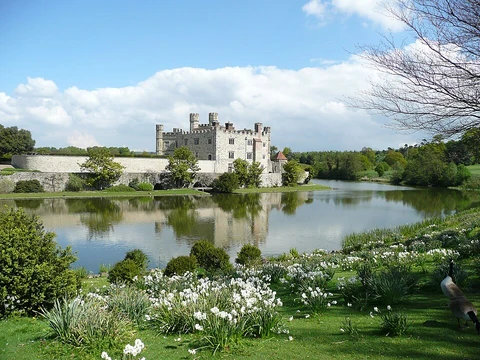
King John's Castle (Carlingford)
A Norman enclosure castle linked to King John and Irish conflicts.
King John’s Castle, also called Carlingford Castle, is a National Monument and enclosure castle in Carlingford, County Louth, Ireland. It sits in the town’s harbour, about midway along Carlingford Lough’s southern shore.
The west wing was built in the late 1100s by Hugh de Lacy, Lord of Meath, not long after the Norman invasion of Ireland. The castle got its name from King John, Lord of Ireland, who supposedly spent three days there in 1210 during his second expedition, when he invaded Ulster to capture Walter de Lacy. A local legend says he started drafting Magna Carta (agreed in 1215) at Carlingford. The east wing was added around 1261. In 1326 the castle was given to Geoffrey le Blound. Edmond Loundres was constable in 1388, and Stephen Gernon in 1400. Hugh O’Neill, Earl of Tyrone, tried to take the castle in 1596.
During the Irish Confederate Wars, the Irish Catholic Confederation held the castle; then Sir Henry Tichborne, 3rd Baronet (a Parliamentarian) captured it in 1642, followed by Murrough O’Brien, 1st Earl of Inchiquin in 1649, and Charles Coote, 1st Earl of Mountrath in 1650. In the Williamite War, Jacobites fired on it in 1689, and it was used as a Williamite hospital by Frederick Schomberg, 1st Duke of Schomberg, before the Battle of the Boyne.
The castle is D-shaped, with walls 3.4 metres (11 feet) thick. The west wing’s curtain wall had a gate house and a square flanking tower, plus deep embrasures with narrow arrowslits. The east wing contains a large rectangular hall that had two main floors above a basement.
- built
- Late 12th century (west wing); c. 1261 (east wing)
- associated_person
- King John, Lord of Ireland
- notable_event
- King John supposedly stayed in 1210; local myth claims Magna Carta drafting began here
Lore & Background
The west wing of Carlingford Castle was built in the late 12th century by Hugh de Lacy, Lord of Meath, shortly after the Norman invasion of Ireland. It acquired the name 'King John's Castle' after King John, Lord of Ireland, supposedly stayed there for three days in 1210 during his second expedition, when he invaded Ulster to apprehend Walter de Lacy. Local myth claims that he began to draft Magna Carta (agreed in 1215) at Carlingford.
The east wing of the castle was added c. 1261. In 1326 the castle was committed to Geoffrey le Blound. Edmond Loundres was constable in 1388, Stephen Gernon in 1400. Hugh O'Neill, Earl of Tyrone, attempted to take the castle in 1596. During the Irish Confederate Wars, the castle was held by the Irish Catholic Confederation, then taken by Sir Henry Tichborne, 3rd Baronet (Parliamentarian) in 1642, then by Murrough O'Brien, 1st Earl of Inchiquin in 1649, and Charles Coote, 1st Earl of Mountrath in 1650.
During the Williamite War, it was fired on by Jacobites in 1689 and used as a Williamite hospital by Frederick Schomberg, 1st Duke of Schomberg prior to the Battle of the Boyne. The castle is a D-shaped enclosure castle with walls 3.4 m (11 ft) thick. The curtain wall in the west wing had a gate house and a square flanking tower, and contains deep embrasures with narrow arrowslits. A large rectangular hall is in the east wing, with two main floors over a basement.
Reader's Guide
King John's Castle, also known as Carlingford Castle, is a significant historical monument in Ireland, reflecting the Norman presence and subsequent military history. Its construction in the late 12th century by Hugh de Lacy marks the early Norman consolidation after the invasion. The castle's association with King John, though based on a supposed three-day stay in 1210, has given it enduring fame, especially through the local myth that Magna Carta was drafted there—a claim not supported by historical consensus but adding to its cultural lore. The castle's architecture, with thick D-shaped walls and arrowslits, illustrates typical Norman defensive design. Its later history—changing hands during the Irish Confederate Wars and serving as a Williamite hospital—shows its continued strategic importance. Today, as a National Monument, it stands as a tangible link to medieval Ireland, Norman rule, and the turbulent centuries that followed, attracting visitors interested in both its physical structure and its layered stories.
Did You Know?
- The castle's west wing was built in the late 12th century by Hugh de Lacy, Lord of Meath.
- King John supposedly stayed at the castle for three days in 1210 during his second expedition to Ulster.
- Local myth claims that King John began to draft Magna Carta at Carlingford.
- During the Williamite War, the castle was used as a hospital by Frederick Schomberg, 1st Duke of Schomberg.
More in Norman castles 1-24
Spotted an error? Know more?
This is a living reference — every entry is fact-audited, and reader corrections feed straight into our audit queue. Suggest an edit · See this site's audit record