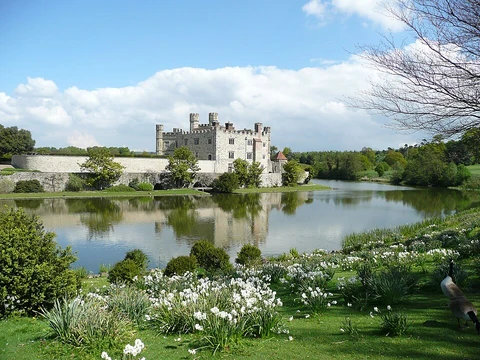
Launceston Castle
Medieval castle, administrative hub, prison, and tourist attraction.
Launceston Castle is a medieval fortification located in the town of Launceston, Cornwall, England. Built after the Norman conquest, it served as the administrative centre of the earldom of Cornwall and later became a prison and site of judicial assizes. The castle played roles in the Prayer Book Rebellion and the English Civil War, and in the 21st century it is operated by English Heritage as a tourist attraction.
- Location
- Launceston, Cornwall, England
- Built
- After 1068
- Builder
- Robert, Count of Mortain
- Original type
- Earthwork and timber castle with motte
- Rebuilt in stone
- 12th century
- Major redevelopment
- After 1227 by Richard of Cornwall
- Current owner
- Duchy of Cornwall
Lore & Background
Launceston Castle was probably built by Robert the Count of Mortain after 1068, initially as an earthwork and timber castle with a large motte in one corner. It formed the administrative centre of the new earldom of Cornwall, with a large community packed within the walls of its bailey. The castle was rebuilt in stone in the 12th century and then substantially redeveloped by Richard of Cornwall after 1227, including a high tower to enable visitors to view his surrounding lands. When Richard's son, Edmund, inherited the castle, he moved the earldom's administration to Lostwithiel, triggering the castle's decline. By 1337, the castle was increasingly ruinous and used primarily as a gaol and to host judicial assizes.
The castle was captured by the rebels during the Prayer Book Rebellion of 1549, and was garrisoned by the Royalists during the English Civil War in the 17th century. Towards the end of the civil war it was stripped for its building materials and rendered largely uninhabitable. A small gaol was erected in the centre of the bailey, which was also used for executions. The castle eventually became the county gaol for Cornwall, but was heavily criticised for its poor facilities and treatment of inmates. By 1842, the remaining prisoners had been moved to Bodmin Gaol and the site was closed, the castle being landscaped to form a park by the Duke of Northumberland. The castle was later used by the Air Ministry for offices, and the ministry left the castle in 1956, after which the site was reopened to visitors.
Reader's Guide
Launceston Castle is significant as a Norman fortification that became the administrative heart of the earldom of Cornwall. Its construction by Robert of Mortain after 1068 established a strategic stronghold controlling the route into Cornwall. The castle's later redevelopment by Richard of Cornwall in the 13th century, including a high tower for viewing his deer park, reflects the wealth from Cornish tin mining. The castle's decline began when Edmund moved administration to Lostwithiel, and by the 14th century it was ruinous and used mainly as a prison and for assizes. Its role in the Prayer Book Rebellion and the English Civil War highlights its continued military importance. The nickname Castle Terrible from its time as a county gaol underscores the poor conditions that led to its closure in 1842. In the 21st century, the castle is a tourist attraction owned by the Duchy of Cornwall and operated by English Heritage, with surviving defences including the motte, keep, high tower, gatehouses, and curtain wall.
Did You Know?
- Launceston Castle was probably built by Robert the Count of Mortain after 1068.
- The castle's high tower was built by Richard of Cornwall after 1227 to enable visitors to view his surrounding lands.
More in Norman castles 1-24
Spotted an error? Know more?
This is a living reference — every entry is fact-audited, and reader corrections feed straight into our audit queue. Suggest an edit · See this site's audit record