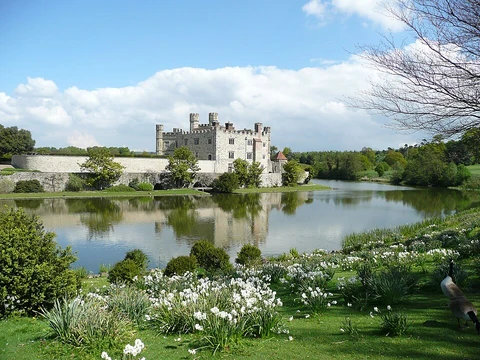
Trematon Castle
Norman castle overlooking the Lynher River, caput of a feudal barony.
Trematon Castle (Cornish: Kastel Tremen) is a medieval castle situated near Saltash in Cornwall, England, United Kingdom. It was the caput of the feudal barony of Trematon and is similar in style to the later Restormel Castle, with a 12th-century keep. Built probably by Robert, Count of Mortain on the ruins of an earlier Roman fort, it is a motte-and-bailey castle dating from soon after the Norman Conquest.
- Location
- Near Saltash, Cornwall, England
- Type
- Motte-and-bailey castle with stone shell keep
- Built
- Soon after the Norman Conquest (11th century)
- Builder
- Probably Robert, Count of Mortain
- Ownership
- Earls and Dukes of Cornwall since 1270
- Notable feature
- Rectangular gatehouse built in 1270
- Grid reference
- SX41065801
Lore & Background
Trematon Castle overlooks the Lynher River and was built probably by Robert, Count of Mortain on the ruins of an earlier Roman fort. It is a motte-and-bailey castle and dates from soon after the Norman Conquest. The site predates the Norman Conquest, with historian William Woolwater calling it an 'ancient palace of the Cornish Kings' built before 959, and Cornish historian Richard Polwhele calling it one of the residences of Condor of Cornwall and the 'ancient earls of Cornwall'.
Reader's Guide
Trematon Castle is significant as a well-preserved example of a Norman motte-and-bailey castle with a stone shell keep, similar to Restormel Castle. It served as the caput of the feudal barony of Trematon and remained a principal residence of the earls of Cornwall until the Duchy of Cornwall was created in 1337. The castle's history includes use as a prison in the 16th century and as a temporary storage site for treasure brought back by Sir Francis Drake in 1580. In the 20th century, it was leased to notable figures including Hugh Foot, Lord Caradon, and later became a pop-up hotel. Queen Elizabeth II visited in 1962. The castle's continuous ownership by the Duchy of Cornwall since 1270 underscores its enduring importance.
Did You Know?
- Trematon Castle was built probably by Robert, Count of Mortain on the ruins of an earlier Roman fort.
- In 1580, treasure from Sir Francis Drake's circumnavigation was stored at Trematon Castle before being moved to the Tower of London.
- Queen Elizabeth II visited the castle on 25 July 1962.
- The castle has been owned by the Earls and Dukes of Cornwall without interruption since 1270.
More in Norman castles 1-24
Spotted an error? Know more?
This is a living reference — every entry is fact-audited, and reader corrections feed straight into our audit queue. Suggest an edit · See this site's audit record